
1 877-431-4276

Global Network of Evangelists

Building a Local Church with a Heart for Evangelism | Jose Zayas

Pastor Jose Zayas leads a church in Portland, OR, but he has a strong calling on his life for evangelism. Today we talk about how to equip the local church to reach people for Jesus. We talk about creating a culture of evangelism in the church by encouraging members to share their faith and inviting people into their homes for discussion and connection. We also talk about Pastor Jose’s process for putting together an evangelistic sermon.

Learn more about Jose Zayas: https://www.josezayas.org/

Transcript: 

Evangelism Coach Daniel King (00:00):
Welcome to the Evangelism Podcast. I’m Daniel King. I’m excited about telling people about Jesus today. I have a very special guest and good friend with me, Jose Zayas. Thank you so much for being on the Evangelism Podcast

Pastor Jose Zayas (00:12):
Daniel King. It’s an honor. It really is.

Evangelism Coach Daniel King (00:14):
So you are a pastor and an evangelist, you pastor in the Portland, Oregon area, which is one of the great mission fields of the United States.

Pastor Jose Zayas (00:26):
It’s not the Bible belt.

Evangelism Coach Daniel King (00:27):
It’s not the Bible belt, but you’ve been involved in evangelism for many years and we’re here together in Zimbabwe this week with the global network of evangelists. Both you and I serve helping to, I forget what they call us. We’re the global council or global, it’s something

Pastor Jose Zayas (00:49):
Cabinet.

Evangelism Coach Daniel King (00:49):
Cabinet,

Pastor Jose Zayas (00:49):
Something like that. Yeah. We’re the hangout crew to help just give oversight and guidance as to where

Evangelism Coach Daniel King (00:55):
It’s, but it has been wonderful being part of the global network of evangelists because their goal is to bring evangelists together to collaborate with many different expressions of the gospel, but with one message. Yeah,

Pastor Jose Zayas (01:12):
Yeah.

Evangelism Coach Daniel King (01:13):
So you kind of grew up spiritually under the Louis Palau organization helping to organize events for Louis Palau. Kind of talk to me how that happened. You were a student at Oral Roberts University?

Pastor Jose Zayas (01:29):
Yeah, I was a student studying evangelism and just this passion to share the gospel. But I think you can attest to it when you’re in school, you have all the drive, the passion, you’re getting some foundation tools, but I felt like by the time I was leaving, there was so much more to learn. So my prayer, when people ask me in my senior year, what are going to do next? I’m like, well, more study. I feel like there’s more to learn, or I’m praying that the Lord would connect me with someone who’s doing it because I think things are better caught than just taught. And that’s when Luis Palau came to Tulsa in 1994 to do one of his crusades. And to me that was the aha. My wife and I were in a church that was involved in one of the partner churches, and I’m like, I’m going to go. So I volunteered, did an internship and learned everything I could and fell in love with how they were approaching it. And God opened the door. By the time the actual outreach happened, October in 94, I was finishing the spring of 95. They actually hired me the day after graduation to say, we want to take you on the team and use your gifts to help us reach more people.

Evangelism Coach Daniel King (02:41):
And so what were some of the things that you learned from being around Louise Palau? He was a great evangelist.

Pastor Jose Zayas (02:49):
Yeah, there’s too many, but a few that just stick out. He was a lifelong learner, and so he learned a lot of his methodology from Billy Graham and other teams doing it. So he was humble enough to say, there’s more to learn and you can always grow. And so innovation has always been a part of their ministry. And so just because we’ve done it doesn’t mean we need to always do it exactly the same way that’s in their DNA. And I learned that from Luis Palau. I think a love of the local church. It was never about the event. It was never just about numbers. It’s always about how can we bless the local church, build a local church and equip the local church for ongoing evangelism. And I think just the simplicity of the gospel. So many organizations in a sense try to do too much like this. One thing we do preach the

Evangelism Coach Daniel King (03:51):
Gospel, the simple gospel and keep preaching the same message over and over again.

Pastor Jose Zayas (03:55):
He had, and it was some British or Scottish quote that he had in his office. God loves it when people speak well of his son. God loves it when people speak well of Jesus and he called it, we need to keep preaching the same old thing, not like the gospel’s old and relevant, but people are looking for the new thing. No, we need to keep preaching the good news, which is the same old thing which people have been sharing for 2000 years until it’s dying day. He kept it to the same old thing, which is not old. But yeah.

Evangelism Coach Daniel King (04:38):
Now you bring a unique perspective to evangelism. You’ve been involved in evangelism for many years and now you’re serving as a pastor. Where do you see that partnership between the evangelist and the pastor? What should that look

Pastor Jose Zayas (04:54):
Like? Yeah, I think, and again, I learned this from Luis Palau, that evangelist has a responsibility to the local church and whatever happens out of their life and ministry, it begins and ends with a real connection to the local church. So for me, the story started, I was just an evangelist traveling our own ministry, but loved, supported by my local church, and I was on the preaching team and they had me do all the evangelistic preaching in our year long. They invited me to do it. So that relationship within the local church wasn’t new, but when our church exploded with growth, the spirit was moving, people getting saved, left and right. Church planting within our city became a reality, and they’d invited my wife and I to help lead one of these new church plants. So for me, I didn’t go into it saying, I’m going to pastor and be an evangelist. It was more of, I just want to bless my uncle church.

Evangelism Coach Daniel King (05:49):
That was it.

Pastor Jose Zayas (05:51):
And I think that no matter what it looks like an evangelist without a deep connection to a local church ends up being a danger for them and for the local church, because an evangelist brings a unique blessing calling insight, wisdom, emphasis like passion for the gospel. So I would say for one to every church pastor, where are your evangelists? Now, they may not all be in your local church, all members and growing there, but there ought to be two, three, at least one evangelists that you’re a partner with all the time because God gives all the gifts for the building up of the whole body. And a church without an evangelist connection is only going to stunt their growth and blessing. So there ought to be a deep connection from the pastor. Where are your evangelists? If they’re in-house better, if they’re also partners and guests, great.

(06:54):
And to the evangelist, likewise, where are you submitted? Where are you growing? Where’s your family? Where are you tithing? Who knows your name? Who knows your name? And who’s praying for you when you’re gone? Who knows where you are, what you’re doing and is interceding for you? My whole life, I don’t say it as a boast, but I learned it from Luis. He was connected to his local church from the beginning to his dying day. And for him, he was the same church. He was planted in the same church for 40 plus years. And I would say with passion, I’ve always had that. Now it just turns out I get the blessing of doing both shepherding, guiding a church. But funny thing, Daniel, I do it from the seed of the evangelist in that there needs to be multiple perspective leadership in Mary Church, you ought to have prophetic, you ought to have equipping and teaching. You ought to have evangelistic, you got to have care. All those Ephesians four gifts need to be expressed. But when we’re in our church, I actually sit in the seat of thinking as the evangelists. But on our team and on our elders and on our staff, we have shepherds teachers

Evangelism Coach Daniel King (08:08):
To kind of bring balance. Because if you have too much in one gift, the church becomes unbalanced. And it could be unbalanced on evangelism or it could be unbalanced in teaching. And so God gives all the

Pastor Jose Zayas (08:21):
Gifts he does

Evangelism Coach Daniel King (08:22):
For the edification of the saints and equipping them for ministry.

Pastor Jose Zayas (08:25):
Exactly.

Evangelism Coach Daniel King (08:25):
And we need all of them. So in your church, what does the evangelism component look like of what you do? What are some of the unique ways that you reach out to your community?

Pastor Jose Zayas (08:35):
I just want everyone able and willing, the passionate to share Jesus. So the simplest strategy is in sharing the gospel all the time and making the gospel ordinary language. We want to model and teach. Everyone has the good news and everyone could do it. So our strategy isn’t much event as it is. Who’s on your list? Who are you praying for? Who are you inviting into? And for us as a culture and our church, because Portland’s a very cynical culture, most of our entree to people come to our church is actually coming to someone’s home first. So we’re big on groups. 85% of the people who come on Sunday are in an active group in a home. And so we use the message on Sunday as the tool for conversation in homes. And the goal is invite your neighbor into that conversation. And because we’re all digital and coming, hey, just invite. You’re going to listen to what happened, and let’s have a conversation about the Bible. Bring your questions, bring your doubts. So people often are in someone’s home. And I think the gift of hospitality, a meal together, the life on life, the kids playing together is the bridge, especially in a secular and a skeptical culture like Portland. And so most people end up in a home and then out of that start watching online

(10:00):
And then end up feeling the confidence to come. And we also use tools like Alpha where it’s conversational based. And the majority of the people actually come to Christ though are through our youth group, which is the most healthy sign. And students, inviting students doing the same thing, inviting ’em in their house, inviting ’em to hang out, inviting ’em to youth group, inviting ’em to camps, inviting ’em to concerts, invite. So it’s a mix of relationship and invitation.

Evangelism Coach Daniel King (10:26):
And you really create, which is the same old thing, you create a culture where you celebrate that and encourage people

Pastor Jose Zayas (10:31):
To reach out, celebrate. And we’re given the gospel all the time and every Sunday, even though we do it through the avenue of prayer, rather than come to Christ and do this, it’s hey, begins with following Jesus. And so part of our worship is we pray for one another. And so this morning or whatever, if you would like to receive prayer for anything, there’s a struggle in your family. There’s a struggle in your soul if you would like to start following Jesus. And we do it through prayer team, I think it’s really key. I want people in our church leading them to faith. So I’ll give the gospel. But I think the joy is like if you’re a part of our church, and man, you didn’t get the chance to share it from the stage, I want you Daniel, to have that celebration of Mark May have come to receive prayer, but the first question our prayer team is going to ask is, how long have you been following Jesus?

Evangelism Coach Daniel King (11:29):
Yeah, that’s the most important question there

Pastor Jose Zayas (11:31):
Is. And I had love to pray for you. How long have you been following Jesus? Well, it hasn’t started. Well, can I just remind you what Jose just said? And it’s that culture of expectation and anyone could do that. And I love that I get to do both. I get to do big evangelism like this and also get to do it week by week in the local church.

Evangelism Coach Daniel King (11:57):
So you’re going to be preaching the gospel one of the nights here in Zimbabwe. Give us a little preview, a nugget of what you’re going to talk about and how you pull people to Jesus.

Pastor Jose Zayas (12:09):
Yeah, that’s a good question. I always come with four or five messages stirring in your heart. Partly, I can’t answer it in that we heard from Paul last night, we’re going to hear from Bob tonight. I want to see where they’re at and then pick up in a sense, not do the same exact text or whatever, but to me it’s through story. So I think as of now, it will be my worst day and my best day. And they actually got combined on the same day. That’s the hook. So I’ll talk about, well

Evangelism Coach Daniel King (12:44):
That’s intriguing. What’s your worst day? What’s your best day?

Pastor Jose Zayas (12:46):
Well, you have to come, you have to listen. So I’ll start with some of the hard moments of my life, and I’ll throw a picture on the screen of an image like, lemme tell you what happened there, and then lemme tell you what happened. People can identify with struggle, especially if you’re coming from a Western context, people might assume you have it all.

(13:08):
So I’ll start with like, man, have you ever been in the spot? Or Hey, have you ever experienced? And that to me, grabs the identity clear statement from Jesus. More than likely it’ll be John 10, 10, there’s a thief. It comes to steal, kill, and destroy. Unless Bob preaches on that tonight. Then you flip it, but simple pointed what Jesus said and then unpack that in story. So lemme tell you what the thief, what happened, which was my worst day. And the thief wanted to steal, kill, and destroy my wife. But she said, I’ve come to give you life and life to the full. Explain what happened to her. And then use that visual and that illustration to remind people what everyone needs to know, created to know God. Sins broken that down. But God’s been after us chasing, wanting to rescue. And we can know it and see it because he sent his very best himself, his son Jesus.

(14:17):
And Jesus died rose again. So I try not to read too much text because in a field, I don’t know if they’ve been to church, I don’t know if they know the Bible, but I want ’em to hang on to one small statement or one small story illustrated through my life. And what do we need to do? We need to receive. And when’s the time to do it now because life and death isn’t how we respond. And it happens that my wife almost died in the hospital and it was the gift that a doctor brought in that she received that gave her new life. So I think visuals help, which you’re such a visual illustrative preacher, so that seems to be your mojo too.

Evangelism Coach Daniel King (15:03):
Yeah. Thank you so much for walking us through that process of how you build a sermon. And I think there’s several elements there that are so important. Putting your own story in it. You’re not just yelling at people, you’re like, this is what is real to me. And then tying it into the gospel. And then I think one of the most important things for every evangelist is to that have that moment where you’re calling people to make a decision. If you don’t call them to decision, what’s the point? And say, apply this to your life. Are you ready right now to cry out to Jesus?

Pastor Jose Zayas (15:38):
Yeah. And depending on the story and people’s background, or if you’re telling someone else’s story, in one sense, the best is personal. My wife received a blood transfusion and it literally saved her life. And it was the gift someone else before my wife was sick, lovingly gave of themself so that at the right time, if my wife,

Evangelism Coach Daniel King (16:05):
The blood saved her

Pastor Jose Zayas (16:06):
Would receive. And it was someone else’s blood that matched her type. So what did she do? She received the gift. She had passed out, but if she didn’t receive that gift, she literally would not be here today. And so God already did everything to say this.

Evangelism Coach Daniel King (16:26):
Wow.

Pastor Jose Zayas (16:27):
But it’s not until the moment where we receive him to those who receive him, to those who call on his name, and Jesus has given his blood, he’s already given it, and it matches our type. It fits. He knows, I mean, the Bible says he understand. He was acquainted with all of our sufferings. He understands exactly what we’ve been going through. Yet his pure life giving blood can change anyway. So I don’t always preach that message, but the same process goes through.

Evangelism Coach Daniel King (17:00):
Yeah, that’s really valuable to think about how you bring a message into being. Yeah.

Pastor Jose Zayas (17:06):
And frankly, I learned it. If you heard Luis’s preaching, it was always personal. It was always story form, and it really focused on the cross and resurrection. He illustrated that more than anything. And so I think as evangelists, we got to think through, we know the gospel, but to the person who doesn’t know it, how can we make it clear? And you’re right, call for a response

Evangelism Coach Daniel King (17:38):
And relating it to their life so it’s not just an abstract thing. It’s something like that can really help them in their life.

Pastor Jose Zayas (17:45):
Jesus said, the kingdom of God is like,

(17:46):
And then depending on his audience, he flipped the illustrations. He so many illustrations on what the kingdom was like, you think? Is he schizophrenic? No, we forget. He was talking to actionable. He was talking to farmers in farm language. He was talking to sheep herders in sheep language. And so I think his evangelists, we need to think of where are people at and how do I take the real truth of the gospel and so make it vivid that they’re almost, I want the audience to almost be saying, why in the world would I not go this way? Now the spirit does the drawing, but it’s my privilege and your privilege to think through so that it’s so like ding, ding, ding, ding.

Evangelism Coach Daniel King (18:38):
Yeah,

Pastor Jose Zayas (18:38):
Why wouldn’t I say yes to that right now? Yeah.

Evangelism Coach Daniel King (18:41):
Amen.

Pastor Jose Zayas (18:41):
Are you ready, Daniel?

Evangelism Coach Daniel King (18:42):
I’m ready. That’s right. Well, this morning when you were doing devotions for the whole team, Desmond Henry leaned over to me, he’s like, Hey, he’s doing pretty good for an OU grad. What is that? So I’m an OU grad too. So I think he was teasing me a little bit. But you’re doing a great job. It’s such an honor to be friends and to serve with you in so many different places and countries. And

Pastor Jose Zayas (19:09):
It’s

Evangelism Coach Daniel King (19:09):
Neat to see what God is doing.

Pastor Jose Zayas (19:10):
It is, if I could just take a second what you are. I’ve seen Daniel preach in the school and take a rowdy crowd and have him at the drop of the hat. If you actually haven’t taken the time to hear Daniel preach, I would just say to those watching or listening, get behind this man because the gift and the call and your passion, every time I see, it’s like you’re the first person to talk, the person who’s responding, the first person to jump in, the first person to say yes, and go do it. And you ought to get behind the people with that kind of heart and passion. And if you’re not supporting King Ministries or if you’re doing it at a low level, I would just encourage and challenge you to say, what can we do more to make sure that ministries like this are making a difference? Because there aren’t that many who are just preaching a straight gospel with power. And so you didn’t ask me to say that, but seriously, when you find anointed ministries, get behind them. And it not only blesses him and the world, but it actually blesses our own life when we’re partnering with things that are producing fruit. And so get behind them and get behind the ministry.

Evangelism Coach Daniel King (20:24):
Well, thank you so much for your kind words, and thank you for being on the Evangelism Podcast.

Pastor Jose Zayas (20:28):
Love it. Thank you.


Subscribe to The Evangelism Podcast on Apple iTunes

Listen to The Evangelism Podcast on Spotify

Subscribe to The Evangelism Podcast on Google Podcasts

Listen to The Evangelism Podcast on Amazon Audible

The Evangelism Podcast is also available oniHeartRadio

Evangelism in France | Leave the Shore | Timothée Paton
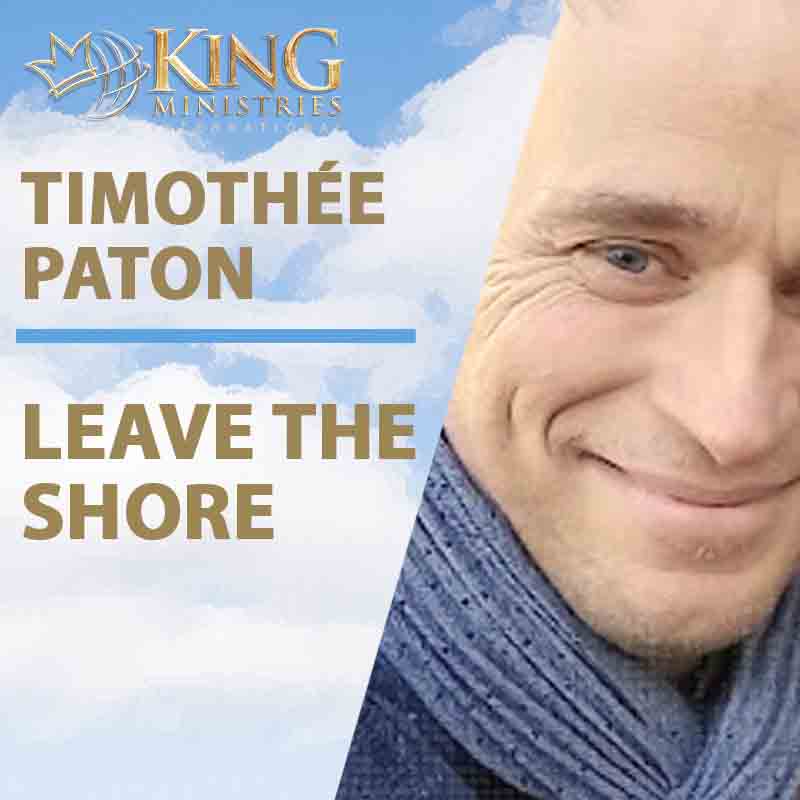
Timothée Paton is an evangelist passionate about reaching France with the Gospel. On today’s episode of the Evangelism Podcast, we discusses the current spiritual state of France, noting that while churches have grown in size, the presentation of the gospel message has often been lacking. Timothée shares his vision to bring the clear, simple gospel presentation back to the forefront of church services. Timothée also talks about using short gospel stories and radio spots to effectively communicate the good news. He challenges believers to leave their comfort zones and take the gospel to the “deep end” – the unreached areas of France and the Francophone world. He expresses optimism about the opportunities to reach the French, particularly through the influx of believers from Africa, and calls for more missionaries to minister in the rural, traditionally Catholic regions of the country.

Buy the Book: Leave the Shore: https://amzn.to/3WGhpko

Learn more about Timothée Paton: https://timotheepaton.com/

Transcript: 

Evangelism Coach Daniel King (00:00):
Welcome to the Evangelism Podcast. I’m Daniel King. I’m excited about telling people about Jesus. And today I have a very special guest all the way from France, Timothée Paton, thank you for joining me today.

Timothée Paton (00:16):
Thank you Daniel. It, it’s a joy to be with you. We met once that’s back in Amsterdam, 2023 if I remember. Well,

Evangelism Coach Daniel King (00:27):
Yeah, that was at the everyone conference there with Dr. Billy Wilson. God gave Dr. Wilson from Oral Roberts University a vision to reach everyone on Earth with the gospel before 2033, the 2000 year anniversary of the first day of Pentecost. And so I believe that’s a vision that comes from God. It goes right in line with the Great Commission. And the Great Commission is something that you are very excited about. Tell me a little bit about what God is doing in France right now.

Timothée Paton (01:04):
Well, I got excited probably because my parents got excited about serving in France 60 years ago. I mean, my mom and dad are very similar to yours. They left the comfort of a wealthy or Christian nation and they came to a place where the gospel was not very known. So my parents came, my dad from Glasgow, Scotland, my mom from Birmingham, England, I have none of their accent. And I was born as an MK right here in the central of France where it was tough back in 1964, I was told. And in 2025, it’s still a tough place, but as you know, France like Western Europe is wide open. We can tell people about Jesus anywhere, anytime. So I’m excited. I guess I got excited when I saw that mom and dad found the best thing to do in the world was to tell people in France about Jesus.

Evangelism Coach Daniel King (02:07):
And what are you seeing God do in France through your ministry right now?

Timothée Paton (02:14):
Well, when we got married about three and a half years ago, after many years in Southeast Asia, I realized that I left France in 1999, came back in 2019, and then I realized maybe by going overseas, when you come back, you see what you couldn’t see so well because you were part of the picture. So when you leave the picture and come back into the picture, I realized that churches in France had great services. Churches were bigger than 20 years before almost mega churches in Paris and a few other places. But now realize the worship is good. The church building is top-notch. You could be in California and the service is so good, people are very welcoming. But something interesting had changed from in the nineties, the preaching of the gospel, which used to be in the Assemblies of God, where I was brought up on Sunday afternoon.

(03:24):
Jesus saved only at 3:30 PM on Sunday afternoon. And we prayed for the sick when the service came to the end. But since that gospel meeting has been taken away, we took away the gospel meeting, but we took away the gospel and the meeting. So the preaching of the gospel, the A, B, C, as Bonky used to say the A, B, C was dropped out of the Sunday morning service. So I realized it was time to bring the gospel back. It doesn’t have to be on Sunday afternoon, but it has to be back at the heart of the church. So my wife and I realized that the best thing we can do is to ask pastors in France who invite us to speak. What about if we had a gospel service on Sunday morning? And for some pastors, the two don’t go together Sunday morning gospel service.

(04:24):
And we said, Jesus can save on Sunday morning. And many of them would say, Hey, I mean they wouldn’t say so plainly, but I could read between the lines Sunday morning is a service for God’s people. And I said, well, you’d be surprised if we have a gospel service on Sunday morning. How many people in your church will actually respond when the call is given publicly to turn to Jesus? And we’ve had these gospel services on Sunday. I preach the gospel, people respond, and I love the look on the pastor’s face. And he says, wow, this lady’s been in my church for 20 years. She’s been worshiping where he thinks she’s been worshiping. She’s been singing, now she’s going to worship because she’s born again.

Evangelism Coach Daniel King (05:19):
Amen. And one of the things I really like on your website is you talk about having gospel talk and not making it boring, but making it interesting using stories. Give us some examples of what you would recommend to a pastor to include in a gospel talk on Sunday morning. How do we take it from being just a boring, sometimes condemning presentation of facts to making it dynamic and interesting, using stories in a way that communicate the truth of the good news?

Timothée Paton (06:04):
Well, I think stories are the best way to captivate any audience. And we sometimes think stories are for kids in Sunday school so they can hear another Bible story. But everyone is made, it’s in our DNA, people respond. You can see the body language of the congregation actually rise when the preacher says back in 1924, there was the famous Russian clown that would go around the country and people suddenly the body language will change. And I realized that there’s nothing more powerful than a story. I think our sermons are like bonkers, bonkers are in the Second World War. You had these very tight buildings with soldiers, with hide, no windows

Evangelism Coach Daniel King (07:03):
Made out of concrete, very

Timothée Paton (07:04):
Hard concrete. So it’s good to have the doctrine. It is good to have sound teaching, but if you don’t have windows in your house, you’ll suffocate. And we have too many suffocating sermons from the pulpit. So we need windows to get the light through. But you can’t build a sermon on windows alone. You need some windows. I think Billy Graham had a window, a story every seven or eight minutes to keep the audience captivated, but also to bring the light on the word. So one of the keys of gospel talk, we’ve given it another name since I’m back in France, it’s called Luter. It’s like a circle of people who are together to proclaim the gospel and one of the keys to captivate your audience anywhere in the world. I’ve seen it from Colombia to New Zealand to Finland and France. Wherever you go, whether you have very wealthy people or your stick somewhere in the bush of Africa, everyone responds to a story.

(08:16):
So one of the keys that I teach in these gospel talk sessions is I plead pastors and preachers and missionaries bring stories. I have here myself, hundreds of stories that I’ve cut out of newspapers, magazines, Christian calendars, and I use them. I use maybe two or three in a sermon, and I know that will really bang the nail. So then the truth, and also teach one truth at a time. There’s a Russian proverb that says if try to run after two rabbits, you would lose both of them. So run after one rabbit catch it. And that’s enough for a sermon.

Evangelism Coach Daniel King (09:07):
Yeah, sometimes it’s hard to be disciplined to stick with just one idea. Can you share with us one of your favorite stories? You have hundreds. Give me one or two of your favorite gospel stories that you use.

Timothée Paton (09:23):
Yeah, there’s one I’ve used in many places, this little girl probably in France many years ago when trains were not very common and she heard about trains, she’d never seen a train, maybe a picture of a train. So she said to her, dad, dad, please take me some time to the train station. I know there are trains passing through every day. Please bring me there. So the dad took the little girl, she’s maybe nine years old, and took her to the train station and she was fascinated. She’d never seen a train before. Suddenly a train comes into the station and this very rough looking man surrounded by two policemen, handcuffed, comes out of the train and he’s about to be taken away by a police car. The little girl who’s a believer, she leaves, her dad runs to this man she’s never seen, of course, very terrifying face.

(10:36):
And she looks at him and she says, I’ve got something to tell you. And this man looks to the little girl and says, what do you have to say? And she says, Jesus loves you. She runs back to her dad. The dad is a bit surprised. The man gets into the police car and ends up in jail. And the words of that 9-year-old girl is like a broken record in his mind. Jesus loves you. Jesus loves you. She didn’t give a long sermon, but she brought the whole gospel in those few words, Jesus loves you. A few months later, he’s on his knees, in his cell, in his prison cell, and he cries out to God and he says, God, I need that love that I don’t have in my life. And he became a believer, the power of telling the truth in three words. Jesus loves you.

Evangelism Coach Daniel King (11:38):
That’s a beautiful story. Let me tell you about what I’ve been doing with my stories. I’m like you, I like to collect stories. And so recently I’ve been recording some of my stories as 62nd YouTube short videos, and we’ve been putting them up on YouTube in order to build momentum with the algorithm on YouTube, we’re posting three videos every single day. And so each one is only 60 seconds, but each one is one story with one idea. And then at the end of it, I say, if you want to know more about Jesus, watch the video. I pin down below and I point like this on the video. And right there, there’s a place on YouTube where you can pin a video and it will take them to a longer session on how they can properly be saved. And so we’ve just been doing that the last two months and just this month we’ve had over 30,000 people watch these little stories.

(12:44):
And I think that’s just the very tip of the iceberg of what is possible because I have some friends on YouTube and they get a million views on one video. So you can imagine if you take a gospel story, 60 seconds, just share the story and then give people a quick opportunity to have something that impacts their lives. Just something simple like your story there. Jesus loves you and it can change their life. And so I think that you should go into your cupboard of hundreds of stories that you got there and record some of them so that they can impact more lives. Do them in both French and Spanish. French and English. And English. Yeah. I think there is not many things like that in French. So you will very quickly get a big following.

Timothée Paton (13:43):
Actually, I’ve given a second live to those illustration at a Christian radio called Far

Evangelism Coach Daniel King (13:51):
And

Timothée Paton (13:51):
Far Fem is in the francophone world.

(13:54):
It’s actually the fastest growing Christian radio in the world outside of the US I was told by the director, and it’s an amazing tool. There’s 16 people working full-time in the town of Ulus in France. And one day I said, look, I’ve got these stories. As you say, lying in those envelopes is hundreds of cuttings by theme Easter forgiveness mission, the cross give your life to Christ, which I’ve used for sermons. But I’ve said I will have to leave 400 years preaching those anecdotes and I don’t have 400 years, so I want to give him a second life. So every day, three times a day, they are broadcast. And as you say, it’s very short. It’s 75 seconds, one minute, 15 seconds. And it’s one idea, one story no more with a punchline, inviting people who are listening to the radio to actually respond to the love of Christ.

Evangelism Coach Daniel King (15:01):
Wow. I wonder how many radio spots have you produced? I

Timothée Paton (15:08):
We’ve done 139.

Evangelism Coach Daniel King (15:11):
Wow.

Timothée Paton (15:12):
And they are aired on this Christian radio, which can be heard anywhere in France, but also on the internet. And actually the Christian radio I find, which started 35 years ago as probably a gospel, Christian radio has become very a lot of teaching as if everyone in France was already a believer, it’s oh 0.5%. I’m like, when everyone is a believer, maybe we can put so much Christian content on the airwaves. But since France is mainly resistant to the gospel, they don’t know anything about the plan of salvation. I don’t want to broadcast anything else but the A, B, and C, I won’t even go into D and F. I just want to stick to those three letters. And I’m very happy that they take those one minute, 15 second Christian messages. And sometimes it seems to be like it’s a bit the odd and the odd one in the Christian radio, but actually it should be the other way. We should just be preaching the A, B, C till everyone gets the message.

Evangelism Coach Daniel King (16:31):
Yeah, you are the evangelist. We need more good evangelists on Christian radio. And you actually have a book that you have written. The name of it is Leave the Shore’s. Tell us a little bit about why you chose that title and what someone can find in the book.

Timothée Paton (16:53):
Good. If you hold on, I’ll get you a copy. It’s right there on the shelf.

Evangelism Coach Daniel King (17:04):
Yeah, I found the book on Amazon. And so when I post this podcast, I’m going to put a link to where someone can get a copy of the book. And is that one in French, the one you just showed me?

Timothée Paton (17:21):
Yeah, that’s the latest one in French.

Evangelism Coach Daniel King (17:23):
And then I saw you also have it in English.

Timothée Paton (17:26):
It’s in English. Leave the shore. It’s seen about 20 languages. Some are not fully printed yet, and we just look for new languages and the publisher can keep all the money. The whole idea is to get it out, no copyright, no royalties. Our passion is to get people out of the shore into the deep end.

Evangelism Coach Daniel King (17:51):
Wow. Alright. Well tell us a little bit about the book and the main message.

Timothée Paton (17:59):
Yeah, the book is a challenge to get believers away from the shore. Remember when Jesus met Peter for the first time, he was cleaning his nets. He was discouraged, the two men had never met, but Jesus tells him from Peter’s boat, get back into the boat, bring your nets and let’s cast the nets in the deep end. The deep end is anywhere in the world where people are still waiting to hear the gospel message. For the first time, two thirds of the world have had some knowledge of Christianity. But one third, that’s 2 billion people, not 2 million. It’s not an M, it’s a B. 2 billion people are waiting for the message of the gospel. What gets me sometime is that we translate the Bible in a new English version in a new French, in a new Spanish version with a better cover, with a nicer design.

(19:06):
I was just praying with my wife yesterday for the people of Maldive in the Indian Ocean, a place where people go on holiday. After 2000 years, only 25 books of the Bible have been translated 25 books out of 66 up to 2000 years. For me, it’s a disgrace, it’s an injustice. And maldive is the deep end and we are called to help those who are translating join the Wcl Bible translators who are in the deep end. They’ve left the shore of the us, Australia, maybe a nice place, and they’ve gone to the deep end to translate the Bible for those people who are still waiting for the complete old and New Testament. So for me, the deep end are those places in the world where people are still waiting and you can stay on the shore for the rest of your life going from one conference to another, enjoying Christian music the whole day, just casting your net on the shore, don’t cast your net on the shore, you’ll catch some shelves, maybe some dead fish.

(20:24):
No one is called to stay on the shore. We are called to get into the boat. And I want to speak to people who might have one foot in the boat and one foot on the shore get both feet in the boat. Jesus is not coming on the beach to meet you. He’s waiting for you to meet him in the boat and bring your nets. Everyone has a net. Everyone has gifts and talents. I speak on radio, but I wouldn’t know how to build the walls of an orphanage. In Africa, we have different nets. Use your nets. Don’t compare your net with someone else. Bring your nets, your gift, your talents. Don’t spend your life cleaning your nets. Some people say, when my life is better, when I’ve read the whole Bible, when I’ve been two years to Bible school, when my nets are just right, then I can join Jesus in the deep end of mission. Well, that’s not the way it works. Come with your weakness, with your struggles, with your past, with your difficulties. But by all means, bring your net. Don’t leave your net on the shore. Bring it with Jesus in the deep end.

Evangelism Coach Daniel King (21:44):
Amen. That’s powerful. Let’s talk about the challenges and opportunities of ministering in France. Some people have said that Europe is now a post-Christian nation. I like to say no, it is a pre-Christian nation. It is wide open and ready for a new move of God. And I was watching the news just recently and it was so beautiful to see the ceremony where they reopened the Notre Dame Cathedral

Timothée Paton (22:22):
Because

Evangelism Coach Daniel King (22:22):
For hundreds of years, Notre Dame has been the symbol of Christianity in France. And it was so tragic when it burned down, but now they have restored it. And the Bible says that God makes all things new. And in some ways I see it as a prophetic picture that in the past Christianity was very strong in France and now not so much, but Satan has tried to destroy it. Satan comes to steal, kill and destroy. But Jesus says, I have come to give life and life more abundantly. And in the same way that Notre Dame has been rebuilt, I believe that God wants to rebuild the Church of France to be strong, to be full of the fire of the Holy Spirit, to see miracles once again to send out missionaries around the world. Once again, what do you see working on the ground? What are the great challenges? And then what do you see are the great opportunities that God has for not just France, but all of the Francophone countries, francophone Africa and other places around the world that have been so influenced by French culture?

Timothée Paton (23:46):
Well, interesting you mentioned Francophone Africa. I mean almost half of Africa speaks French.

(23:55):
I think the Africans coming from the Congo, from KaVo, from Cameroon, from Togo, Binna, Congo, they’re coming over to France 60 years after the independence. And most of them are strong believers in Jesus. So the churches in France have been shaken. I’m talking about many the Protestant, evangelical Pentecostal churches everywhere across the country are being blessed by very strong. They know what they believe. Sometimes the French Christians have only Christian as a name, but they don’t really know what they believe. They don’t really read the Bible. But those Africans, they know what they believe and they won’t give in and they won’t be afraid to stand up publicly for Jesus. And what’s very good, because in France there’s no way you can say anything about someone with dark skin that’s against the law. So the best thing is when you have thousands of Africans who’ve come to France and they go for the march for Jesus, which is once a year in Paris, Mar Ur, 90% of the crowd is made up of Africans who live in France and no one dares to say anything.

(25:20):
Being black in France is the best thing because you can have a black gospel choir singing the gospel, gospel music, black gospel music. It’s probably the best tool to reach French people. They might not believe in God, but they have a lot of respect for the Martin Luther King and the civil rights back in America. So when you have a gospel choir singing, it’s probably one of the best ways to reach French people. So I’m telling if you have a black gospel choir, whether you’re from Chicago, LA or Detroit, come over to France with your choir, you’ll be invited everywhere you will go where it’s difficult for me as a white man born in France to go. So there are great ways to reach the French people in rural France. It’s still very, very dark. I mean, yesterday my wife and I went back to where I was born, exactly to the day 52 years ago.

(26:34):
We went, it’s bang in the middle of France. It’s a little place called Ghana. You’ve got Ghana in West Africa and you’ve got Ghana as a little town right in the central of France. That’s where my parents started the ministry back in the early sixties. I was born there, but I was born again at the age of four in Ghana. So I went back memory lane yesterday with my wife and she’s very nice. She goes where I love to go back to, and she was born in Hong Kong, I was born in Ghana, but she comes to my world and I hope one day I can go to her world over there on the other side of Asia. But we went to this church, an old Catholic church a few miles away from Ghana. And I realized that not much has changed in a thousand years.

(27:30):
And I saw those leaflets on the way out, how to pray for the dead with the dead, how to have a better relationship with the Virgin Mary. And I said to myself, those rural places in France, which is a large section of the country, is still untouched with the message of the gospel. So I ran from my car, picked up a few gospels of John, slipped him in that church because we saw no Bible, no gospel. And that’s the way it is. In a lot of villages in France, people have a religion, but they don’t yet know the gospel. They’ve never read. Most French people have never opened the Bible. So we see great things. We see big churches. A new evangelical church is birthed every 10 days in France,

Evangelism Coach Daniel King (28:29):
But

Timothée Paton (28:30):
France is big. France is almost 70 million people. It’s the largest country alongside Germany, the largest country in Europe. So it’s good news, a new church every 10 days. We don’t tell you those who close. But in rural France where we live, my wife and I since early January this year, we realized not much has changed. So if you want to leave the shore of America, bring your nets to places like Central France where people have a religion. There’s a Catholic church in every single village, but most people have no knowledge of the gospel. People are very suspicious. We went for a restaurant for my birthday yesterday. I always have a gospel in my pocket and I don’t just give it like that. I bring the price. I want people to realize the price of the booklet I’m giving them, and I gave it to the waiter on the way out when we paid.

(29:36):
We do pay missionaries, pay for the mill. And I said to her, this book is the oldest book in print. It’s almost 2000 years. In about 20 years time, this book will be 2000 years old. So that raises a little bit of interest. I say this is the most translated book in the whole world. People will do anything to get this book in some countries. And this book is part of a large book that my wife and I read every single day. We start the day with this book. So I don’t just give it as a gospel tract too quick,

Evangelism Coach Daniel King (30:19):
You the value.

Timothée Paton (30:21):
I elevate the value. I want people to realize how precious this book is. But I could see on that woman’s face, there’s something on the faces of most French people when you give the gospel is very cautious. Don’t get me into your thing. Very, very aware of cults. I think the French people are more afraid of a cult and they think we belong to one of those than they are of the atomic bomb. So you can sit on their faces. So we need to pray for France and we need missionaries to come to those rural areas that have had Christianity, but not really the gospel.

Evangelism Coach Daniel King (31:14):
Amen. Well, let’s take a moment right now to pray for France. Would you pray and let’s pray together and agree together for God to send missionaries and for France to come to Jesus.

Timothée Paton (31:29):
Yeah. Father, we thank you that you love this nation, A nation that has known revivals in the past. But we know that people like John Calvin, Jean Calva was born in France and others who brought the Bible back at the center of society. And we know that France centuries ago went through a genocide when the Protestants were either slotted by the millions in France or escaped to places like Switzerland, Holland, South Africa. Though we pray that the gospel would come back. People have had religion. People have seen a church in their village their whole life. Even when they walk through the doors of a church, they don’t always hear the salvation message. Lord, I pray that you will bring new workers to France. This nation is waiting to hear the true message that changes lives. Lord, the country is open. It’s easy to get in. And I pray that you’ll bring gospel choirs from America to tour across this nation singing the gospel. And I preferred missionaries to come in to learn the language and to love the French culture and to become French to win the French. In Jesus’ name. Amen.

Evangelism Coach Daniel King (33:14):
Amen. Powerful. Well, brother, thank you so much for being on the Evangelism podcast. If someone is listening and they have a heart for France and they want to find out more about your ministry or maybe find your book or maybe support your ministry, I’m sure you need more support. What is your website? What is a good way for someone to find out more about you?

Timothée Paton (33:45):
Yeah, well my name, so www dot t mo Payton in one word, forget the accent. The English people will be happy about that. Timothy Peyton,

Evangelism Coach Daniel King (33:59):
Can you spell it for those who are listening?

Timothée Paton (34:02):
Yeah. So Timothy OTE is T-I-M-O-T-H-E-E, Peyton, PATO n.com. And you can find the book and you can write. And if you do come to France, if you leave the shore with your net to France, you will never, never be out of a job. People are waiting and people want to hear the gospel, but they want to see a demonstration as well. They want to see signs and wonders. And I have a feeling, and I just finished, I was just telling my wife when I saw the look on the face of the waitress yesterday, I said to myself, what about if I had given her a word of knowledge, personal word from God? And that’s what we need. We need signs and wonders. We need the gifts of the spirit to shake the unbelief of the French people.

Evangelism Coach Daniel King (35:03):
Amen. Well, may it be so I pray that God would raise up mighty missionaries and ministers and people who are filled with the Holy Spirit have all the gifts of the Holy Spirit, words of knowledge, miracles, signs, and wonders. In Jesus’ name.

Timothée Paton (35:19):
Amen. Amen. Thank you.

Evangelism Coach Daniel King (35:22):
Well, thank you brother so much for speaking with me on the Evangelism podcast. It is so wonderful. I love your heart. I love what you’re doing. It’s so beautiful to see and how you’re continuing on the mission that God gave your parents and now you and your wife are doing it. It’s so beautiful to see. Thank

Timothée Paton (35:42):
You. Thank you. See you soon. See you in France.

Evangelism Coach Daniel King (35:46):
Yes sir.

Timothée Paton (35:46):
Anytime.

Evangelism Coach Daniel King (35:49):
Bye-Bye.


Subscribe to The Evangelism Podcast on Apple iTunes

Listen to The Evangelism Podcast on Spotify

Subscribe to The Evangelism Podcast on Google Podcasts

Listen to The Evangelism Podcast on Amazon Audible

The Evangelism Podcast is also available oniHeartRadio

Recent Episodes